
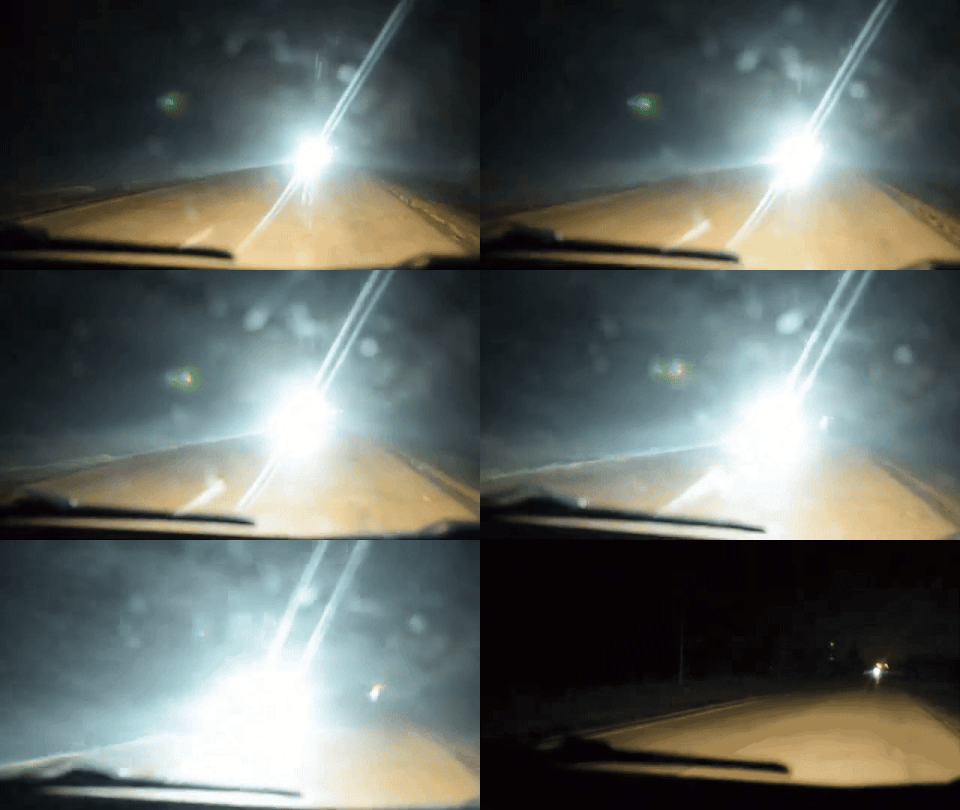
Blinded By The Light?
Headlights are an essential component of vehicles, providing visibility during nighttime driving and in adverse weather conditions. In recent years, however, there has been growing concern about whether headlights are becoming too bright. Many drivers have reported being blinded by bright lights from oncoming vehicles, leading to questions about safety and potential regulations.
The brightness of headlights has increased significantly over the last decade. Traditional halogen bulbs are being replaced by more powerful options, such as high-intensity discharge (HID) and light-emitting diode (LED) headlights. While these headlights offer improved visibility for drivers, they can also pose a danger to other road users. Studies have shown that overly bright headlights can cause temporary blindness, making it difficult for drivers to see the road and respond to potential hazards. This is particularly concerning for older drivers who may already have diminished vision.
Moreover, the inappropriate use of high-beam headlights contributes to the problem. Many drivers fail to dim their lights when approaching other vehicles, leading to discomfort and danger for other road users. A driver blinded by bright lights may not see pedestrians, cyclists, or even other vehicles, increasing the likelihood of accidents. Real cases have been reported where drivers were involved in collisions due to being blinded by bright headlights, indicating that this issue is not just a minor annoyance but a significant safety concern.
Given these dangers, there is a growing call for the government to regulate headlight brightness. Currently, regulations on headlight brightness vary greatly from one region to another. Some countries have begun implementing stricter rules on the type of headlights that can be used on public roads. For instance, Germany has introduced limits on the brightness levels of headlights to enhance road safety. Such regulations could help reduce the risk of accidents and protect all drivers.
Education about proper headlight usage is also crucial. Drivers should be reminded to adjust their headlights appropriately when driving at night and to always use low beams when approaching another vehicle. Signage advising drivers to avoid looking directly at bright headlights and instead focus on road markings can also help mitigate the effects of glare.
In conclusion, while bright headlights can improve visibility for drivers, they also pose significant risks to other road users. The increasing brightness of headlights is a concerning trend that could lead to accidents and injuries if left unregulated. Government intervention may be necessary to establish standards that ensure headlights are effective without compromising road safety. Adjusting driving habits and promoting awareness can further help in reducing the dangers associated with overly bright headlights.
Ban Blinding Headlights and Save Lives!
A petition has been started asking Congress, the Department of Transportation, NHTSA , and the FDA to take this matter seriously and properly regulate LEDs as spatially non-homogeneous, directed energy radiation.